These are extraordinary pictures of our field experience of Oatland Island
|
|
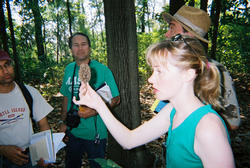
Professor Wells giving the class a lesson on cones as Dr. Strauser looks on.
|
A white tail deer taking a dip in the water to cool off from the heat of the day. |
|
|
|
Whoa! Look at the size of this bison. Bison are also called buffalo. |
A beautiful blossom on a magnolia tree. The white bloom will eventually close up and harden before it falls from the tree. Please excuse my finger :-) |
|
|
|
Say Hello to Kara. She teaches third grade. Kara's doctoral dissertation is on tree tumors. |
This the aviary that I mentioned earlier |
|
|
|
If you look closely you will see a vine called resurrection vine. During periods of little rain this vine shribbles up and turns a washed out green color. If there is sufficient rain, the vine will resurrect and turn a vibrant green color. This is where it gets its name. |
Can you find the successfully camoflouged animal in this picture? |
|
|
|
Hey, it's me. I am taking in all of the sights. Carolyn is to my left. I think she is looking for lichens. |
Dr. Strauser is delivering a brief presentation while the class takes a rest along the trail. |
|
|
|
Parts of Oatland Island opens up to a saltwater marsh |
This is Ashley. She has a tremendous amount of knowledge about environmental science. |
|
|
|
Sondra gave a very insightful presentation on poison oak, poison ivy, and summac. She shared some very helpful tips for identifying these species in the wild. |
Carolyn is planning to teach middle grades math and science. Her presentation on lichens was very intriguing. Lichens have a symbiotic relationship with its host, most often trees. Lichens are generally light green in color but during one of our field experiences we were able to examine a red tree lichen. It is amazing what you will find when you are looking. More photos of my classmates coming soon. |
|


